Feast of the Celebration, Sunday, Feb 1 at 5:30 p.m. with special music
Join Us for a Special 5:30 p.m. Service at St. Anne’s
Celebrate the Feast of the Presentation with St. Anne’s on Sunday, February 1, at 5:30 p.m. as we gather for Holy Eucharist accompanied by beautiful music.
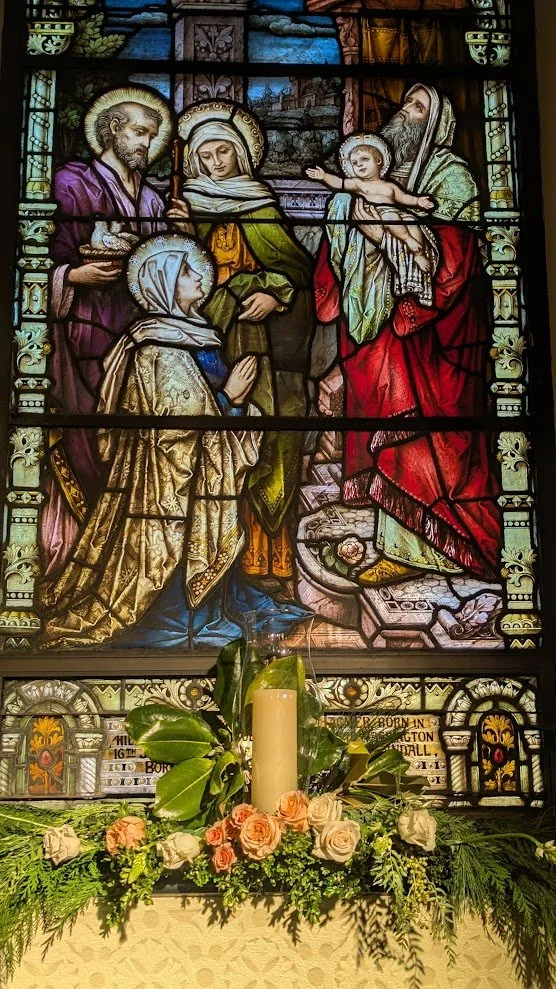
This feast commemorates the occasion when Mary and Joseph presented the infant Jesus at the Temple in Jerusalem, thereby fulfilling Jewish law.
Our service will feature selections from Bach’s Cantata 82, “Ich habe genug,” a lovely musical setting of the Canticle of Simeon. This timeless piece invites us into a spirit of peace and devotion, and we are delighted to share it with you.
Bach's Cantata BWV 82, Ich habe genug, is the composer’s paraphrase of the Nunc dimittis: " Lord, now lettest thou thy servant depart in peace, according to thy word; for mine eyes have seen thy salvation which thou hast prepared in the presence of all peoples, a light for revelation to the Gentiles, and for glory to thy people Israel." The cantata, composed for the Feast of the Purification of Mary on the 2nd of February, 1727, musically depicts Simeon's spiritual state—not one of despair, but of readiness. The first aria, originally for oboe, strings, and bass voice (later arranged for soprano and flute in 1731) is a poignant, gravely beautiful movement that treats the end of Simeon's long life with a mixture of melancholy and resignation. The text then moves to a longing for release (Schlummert ein, ihr matten Augen—"Close in slumber, weary eyes”). This central lullaby employs rocking figures suggesting the boundary between sleep and death as permeable, even gentle. The soprano/flute version intensifies the work's intimacy—the flute's breath-like quality shadows the voice as a second presence. Bach’s setting underscores a belief that the witnessing of God incarnate produces both ecstasy and peace, and that "enough" can be the deepest affirmation of faith. The traditional Arabic hymn O Virgin Mary (Ya Maryam Al-Bikr) is sung in Coptic churches during the Christmas and Epiphany seasons. The hymn honors the role of the Virgin Mary in the incarnation of Jesus. The chorale In dir ist Freude ("In Thee Is Gladness") is a festive 16th-century German hymn. While specifically designated for New Year's Day (the Feast of the Holy Name) within the liturgical year, it seems a fitting end to this 40th day after Christmas, which was the formal end to the Christmas/Epiphany season in Lutheran Germany.
Experience this evening of worship, music, and community. All are welcome—bring a friend and join us as we celebrate together!
Image: Hagner Randall Memorial Window at St. Anne’s, Designed by Franz Mayer Studios of Munich, Germany